With recent news headlines (https://abcnews.go.com/US/happen-colorado-river-system-recover-historic-drought/story?id=98475953) warning of the extreme drought conditions hitting the western U.S. and the region that makes up the Colorado River basin, cutting water use has become top of mind for many citizens and leaders in Colorado and beyond. One city in Colorado has approved a plan to cut water use in the face of this historic drought, and this plan is raising some eyebrows and generating its own headlines due to its potential impacts.
In the summer of 2022, the city council for Aurora (Colorado’s third largest city), approved restrictions on high water turf lawns for all new construction. Originally proposed by Aurora mayor Mike Coffman, all ten members of the city council voted to approve the new ordinance which limits the amount of turf lawns in new developments and golf courses. (https://www.denverpost.com/2022/08/23/aurora-limits-grass-lawns-golf-courses-water-usage/)
The ordinance prohibits water guzzling turf lawns in common areas, medians, curbside landscape and front yards. In back yards, lawns must be equal to or smaller than 45% of the area, or 500 square feet, whichever is smaller. However, an exception was included to allow front yard turf lawns for residences whose backyards are too small to fit the 45% or 500 square feet threshold.
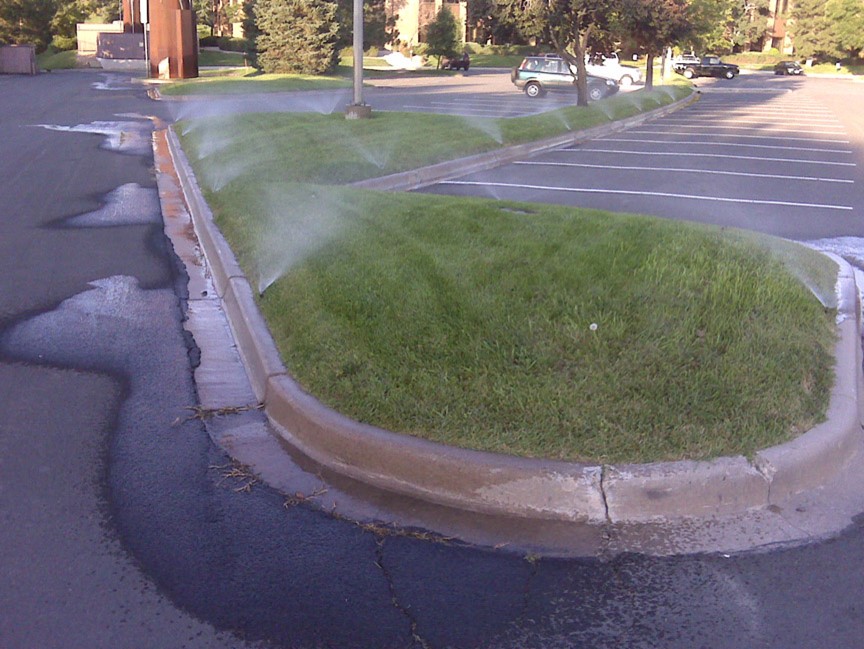
Perhaps most importantly, the ordinance restricts turf from being used merely for decorative purposes in common areas unless it is for use in “active or programmed recreation areas.” The skinny strips of lawn often found in older commercial developments which are inefficiently irrigated as water over-sprays wastefully on to nearby walks, streets and parking lots, will hopefully become a relic of the past.
Wasting water in a parking lot.
Considering that the typical high-water lawn needs 25″ of water annually to look good and green, and Aurora (as well as most of the front-range urban corridor of Colorado) only receives 15″ of natural precipitation all year, reducing or eliminating non-active or un-programmed turf lawns is a very easy way to reduce urban and suburban water use.
This is why another recent headline grabbing story regarding reducing turf lawns was welcome news. In June 2022, the State of Colorado passed a bipartisan-sponsored measure that will encourage property owners across the state to ditch their water-wasting turf lawns (https://leg.colorado.gov/bills/hb22-1151).
The legislation is intended to use state funds ($2 million) to financially incentivize the voluntary replacement of irrigated turf with water-wise landscaping. The bill, HB22-1151, requires the Colorado water conservation board to develop a statewide program that would distribute funds to various “local governments, certain districts, Native American tribes, and nonprofit organizations” for lawn replacement programs. Those funds could then be used to pay property owners to reduce their landscape irrigation by transitioning away from high water turf lawns, towards more climate appropriate landscape treatments. The funds could also go towards expanding some existing programs that already pay property owners to replace water-thirsty lawns, about $1 to $3 per square foot of removed sod. Most of these rebates are only offered in cities in Colorado and not unincorporated areas. One goal of this legislation is to broaden this type of program to other areas in the state.
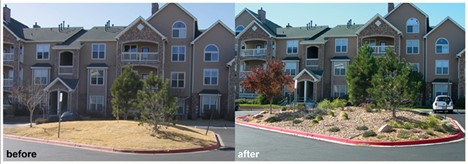
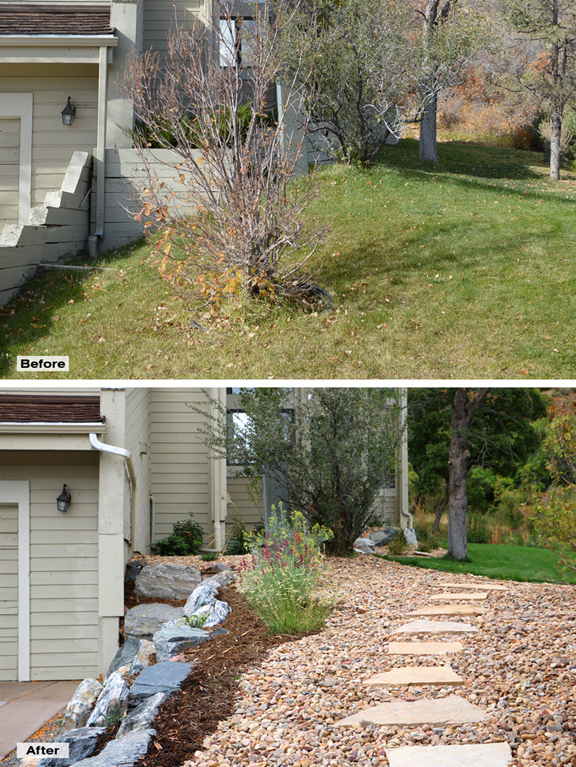
An example of a water saving landscape renovation at a multi-family property in Aurora, CO.
While $1 to $3 per square foot of removed sod may seem generous, there are reports of some landowners in California getting lawn replacement rebates up to $6/sf. (https://www.cnn.com/2022/08/19/us/california-drought-lawns/index.html). Interestingly, some of the rebate programs in California also require installation of rain barrels as well as turf lawn replacement. That is an intriguing idea for rebate offering entities in Colorado to consider, especially since rain barrels only became officially legal just a few years ago.
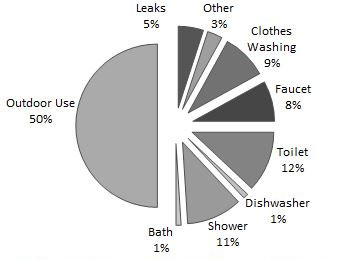
Researchers at Colorado State University estimate that landscapes account for at about 55% of the total annual water use for a typical single family home in Colorado.
Typical Colorado household water use; CSU extension
And most of this goes towards lawn irrigation. In the city of Denver for example, it’s estimated that nearly 25% of the city-wide entire annual water consumption is sprayed on high-water turf lawns. (https://denverite.com/2019/05/06/denverites-can-use-120-million-gallons-a-day-to-water-their-lawns/) Considering that lawns are only irrigated about half of the year or less in Colorado, that is a lot of water that could easily be saved if more lawns were changed into climate appropriate landscape treatments.
Let’s hope that the recent passage of Aurora’s lawn restriction as well as HB22-1151 helps usher in a more water conserving and water conscious future in Colorado and other states in our drought prone region. This won’t translate into a complete disappearance of high-water turf lawns. However, for the sake of our rivers, aquifers and reservoirs, it means that these water-hogging green carpets must be used wisely and judiciously in the designed landscapes of the future.
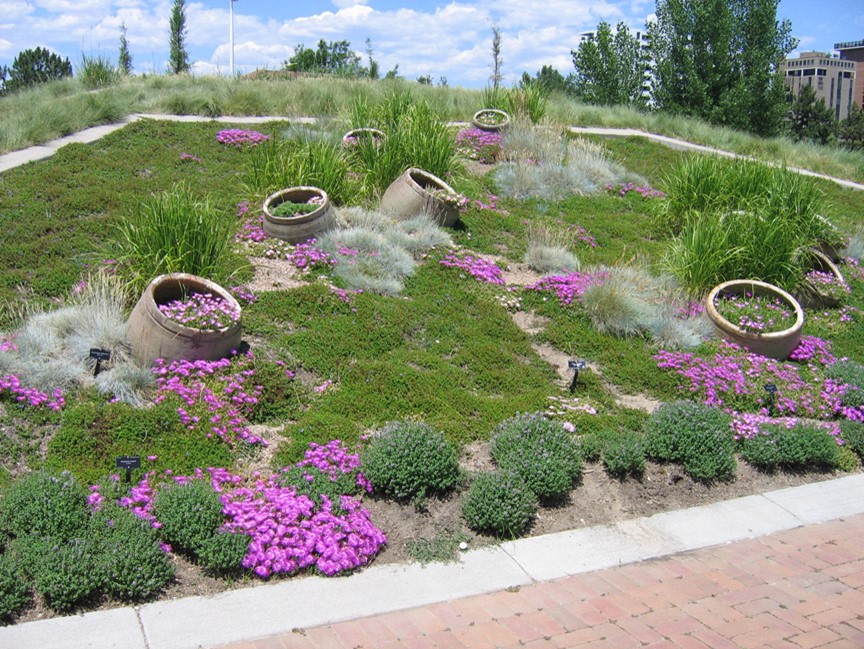
Example of beautiful low-water groundcover alternatives to high water turf lawn.
This is the official blog of Outdoor Design Group, Colorado Landscape Architects. For more information about our business and our services, click here.
Denver Water customers received news last year that the pH of the water delivered to them by Denver Water would be adjusted from near neutral (pH 7.5) to slightly more alkaline (pH 8.5), which began in Spring 2020.
The motivating reason for this change is for improved human health, which is highly commendable (more alkaline water is less prone to leach lead from pipes into people’s drinking water; lead is toxic to human health).
But, this announcement has many in the Landscape Industry wondering what impacts this may have on irrigating landscape plants, as well as indoor plants, and how it may affect water conveyance equipment (irrigation systems, etc).
A cursory investigation via the internet seems to indicate that the possible impacts from higher pH water on irrigation systems and the plants that receive that more alkaline water are:
Increased mineral deposits on irrigation equipment as well as pots, planters, etc. For drip emitters this can be very problematic as the water emits at such a low and slow rate that calcium scale build-up could end up clogging the emitters.
Reduced absorption of minerals and nutrients by the plants.
Most of the soil pH in Colorado’s Front Range are alkaline, so it is possible that this increase in pH will have little or no effect on plants that are already suited or adapted to the native soils of our area. But for plants that don’t do well in alkaline soils, will this more alkaline water be the factor that pushes those plant over the edge? Is this such a bad thing if those plants aren’t suited for our soils (and climate) to begin with?
What are some actions you can take to mitigate the problems of more alkaline water?
Water more deeply and less often. Frequent and shallow waterings may cause more build-up of salts and minerals like calcium.
Use alkaline adapted plants in your landscape rather than plants that need acidic soils. Generally speaking, most native plants for our region (Colorado’s eastern Front Range) are well adapted to alkaline soils.
Check your irrigation equipment for hard water scale build-up. Clean or replace drip emitters that are clogged with scale to ensure proper water flow.
Add Acidifying materials to the soil, like granules available from garden stores? Some experts seem skeptical of this method, saying it is very difficult to have much impact on the total alkalinity of our native soils.
Add more organic matter such as compost? Aside from most xeric adapted plants as well as plants native to our region, many of the standard landscape plants benefit from added compost for multiple reasons. Adding compost to soil can lower the pH (more acidic) as well as aid in water retention, soil texture and provide nutrients to plants.
You may wonder if softening your water via chemical means is a good option. Several experts say this is not a good way to lower the pH of the water for plants because softened water has higher salt content, which is also problematic for plant health.
Some articles sourced on the internet mention lowering the pH of the water you irrigate your houseplants with, by adding vinegar. This may work for a small watering can used on houseplants, but for landscape plants this is simply impractical. Could an in-line fertigation system be used with an acidifier such as vinegar on landscapes? We here at ODG are uncertain about this option, but it seems like an intriguing, if also risky, option.
Time will tell how our landscapes react to the increased alkalinity of our water supply. We hope the effect is minimal, because gardening in our high altitude semi-arid climate is challenging enough as is!
This is the official blog of Outdoor Design Group, Colorado Landscape Architects. For more information about our business and our services, click here.
Once upon a time, there was a castle guarded by soldiers. Enemies obscured by the trees would sneak close to the castle, so the soldiers reduced the threat by removing the trees. Without the trees, the land filled in with grasses, thyme, and chamomile. Animals began to graze in these new fields, keeping the plants low. The soldiers could see clearly across the land, and the sheep were fat and happy. The castle prospered, and everyone who visited wished their land could be so grand. The other land owners cut down their trees and filled in their land with grasses. The smell from the grazing animals wasn’t ideal, so they brought in men to cut the grasses low instead.
The “green carpet” surrounding the finest castles and estates in the 16th & 17th century became a status symbol, and planted the seed for the sod lawn we’re all familiar with today.
In the United States after WWII, automobile technology and availability took off. With the open road ahead of them, well-to-do folks left the cramped urban conditions of the cities, moving outward to new suburban neighborhoods.
Planners like Frederick Law Olmsted and Abraham Levitt gave the people sprawling neighborhoods, with acres of lush green grass. With the popularity of the 2-day weekend on the rise, homeowners indulged in their green Edens. This ignited a new chapter for the centuries old status symbol of the turf lawn – now repurposed for mini-golf and lawn bowl rather than spying enemy invaders and feeding livestock.
“No single feature of a suburban residential community contributes as much to the charm and beauty of the individual home and the locality as well-kept lawns” – Abraham Levitt
Ingrained into the new vision for the American Dream, well-kept lawns became the golden standard. With an estimated 30 to 40-million acres of the United States serving as an irrigated sod lawn today, this status symbol is butting heads with our resources and priorities.
The cold hard truth about lawns are that they are a water hog, high maintenance (what other non-food-production plants do you cut weekly, fertilize seasonally, and treat with chemicals?!), lawns are a food desert for animals & insects, and they do nothing for our groundwater while the water runoff often pollutes creeks and streams with high nitrogen fertilizers, causing harmful algae blooms. All of that lawn maintenance also creates air pollution and noise pollution from mowers, blowers, and trimmer equipment.
A renovation project where Outdoor Design Group helped our client reduce their turf lawn.
But lawns can be great in the right location!
This is where “active-use” vs. “passive-use” spaces come into play. Lawns can be very durable, and are amazing for active children and pets. Maintaining a lawn to play and entertain on is a lovely idea. Kentucky Bluegrass has been a popular turf choice for decades, but climate suited alternatives like Dog-Tuff Buffalo Grass, Bermuda grass, or “steppable perennial lawns” made up of creeping thyme or clover can serve the same purpose as high-water turf lawns with fewer drawbacks. While choosing the right type of lawn for your environment is a start, reducing the overall amount of lawn is still the key to a progressive and sustainable landscape. Maintaining any type of lawn on the side or front of your house where no-one ever spends their time is wasteful for you, your wallet, and the environment.
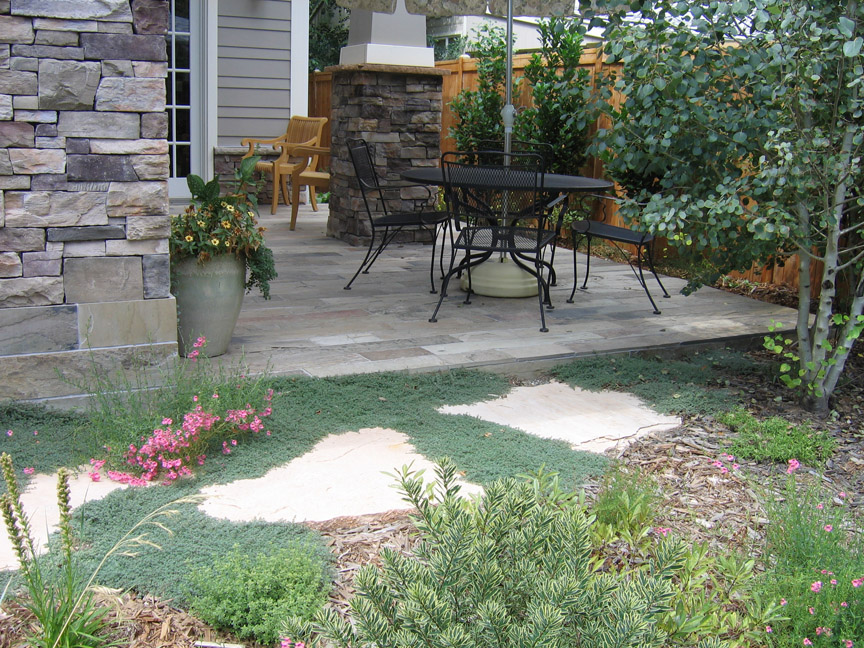
Steppable groundcover used with other perennials, step stones and mulch.
Consider ditching the golf-course-quality front-yard peacocking and save that neighborly competitiveness for the holiday light display. Instead, beef up your shrub beds, add some neat planters, and opt for native seed mixes that include drought-tolerant grasses & wildflowers. Keep your lawn only where you will use it, and plant a nice tree just west or south of it to keep it cooler and healthier during hot sunny days.
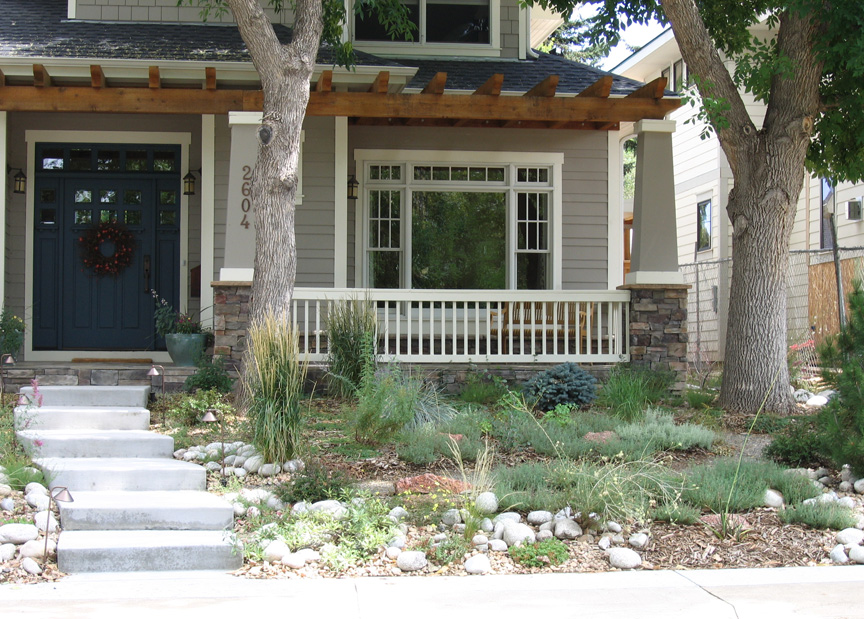
A front yard filled with a diversity of ornamental grasses, perennials, shrubs, landscape rock and mulch.
This is the official blog of Outdoor Design Group, Colorado Landscape Architects. For more information about our business and our services, click here.
It seems that the fields of landscaping and gardening are
full of many timeworn statements that people like to repeat over and over. Some
of these green “rules of thumb” are tried and true, while others may
not be so true.
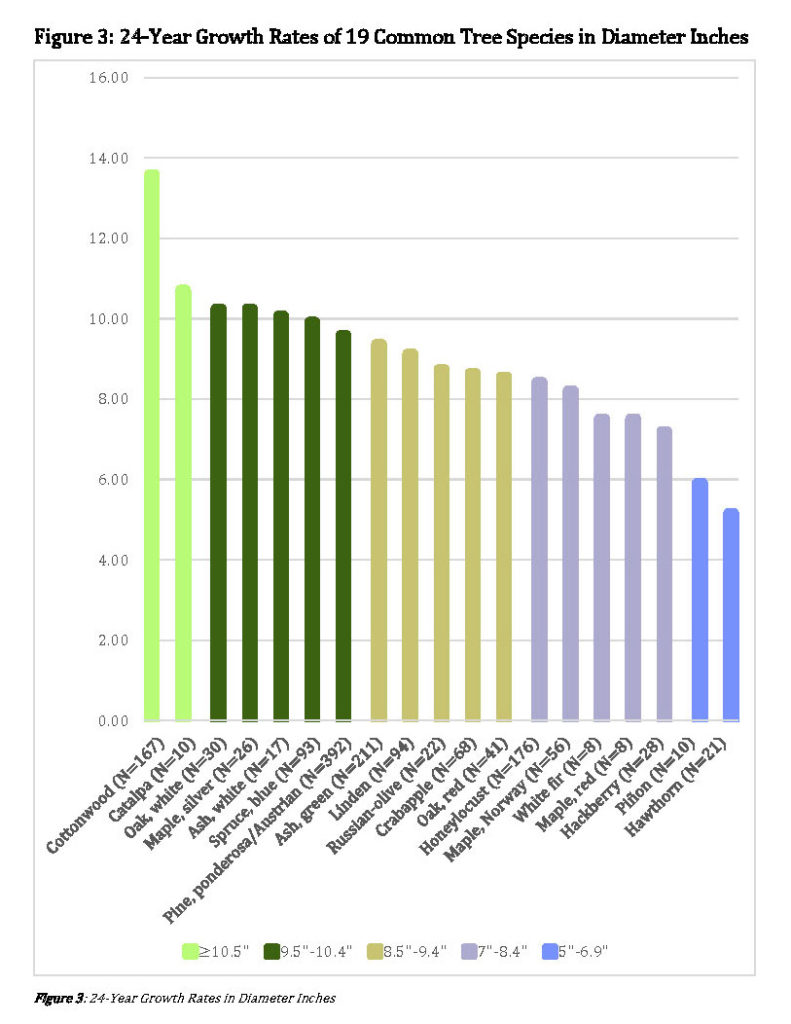
One landscape stereotype regarding tree growth rates that is being challenged is the old adage that “oak trees grow slowly”. I have heard and read this many times and I have repeated this mantra myself for years. But a study of urban trees in the Denver Metro area, published by the Colorado State Forest Service, got me to rethink that stereotype.
This tree study recorded the growth rates of 19 commonly
planted trees planted in public land in the Denver suburb of Westminster, for
24 years. The authors of the study measured the trunk diameters of the trees in
1992, 2000, 2008, and 2016.
The most eye-opening nugget of information in this report is
that the white oak group of trees (bur, swamp white and English oak) were the
3rd fastest growing trees in the study! They grew faster than green ash,
lindens or honeylocust trees. They even
had the same rate of recorded growth as silver maples, a species often referred
to as a “fast grower.”
Data table from the Colorado State Forest Service’s study “Growth Rates of Common Urban Trees in Westminster, Colorado”. Authors: K.A. Wood and A.M. Poulson
One important take-away from this study for me is the fact
that we should reevaluate what trees seem to be the best for planting in
challenging ecosystems such as the urban/suburban areas of the high plains
where Denver sits. It is worth quoting the State Forest Service report to
emphasize this point:
“Some tree species revealed to be fast or moderate growers in this
study have previously been viewed as slow growers, and they are often passed
over at planting time. However, equating growth rates with vigor can be
misleading, as some of the slower-growing tree types on this list can be the
most adaptable to the area (including hawthorn, hackberry and honeylocust).
Adding newly discovered fast-growing species to the planting palette and
incorporating hardy, slow-growing species will maximize the success of planting
projects and promote species diversity.”
To be clear, it is only one type of oak trees (white oaks)
that exhibited fast growth in the study sample. Red oak was also in the study
and showed slower growth. The authors note this is possibly due to the low pH
of high plains soils.
It very well could be that other types of oak trees grow
slowly too, but we don’t have data for that. Or, perhaps another study may come
along and challenge that, as well.
So, as with many “rule-of-thumb” type
statements, don’t believe it until you have seen some data to back it up.
This is the official blog of Outdoor Design Group, Colorado Landscape Architects. For more information about our business and our services, click here.
Your outdoor living space is a great place to unwind.
The cool breeze of air and the warmth of the sunlight can provide relaxation to
you and your family.
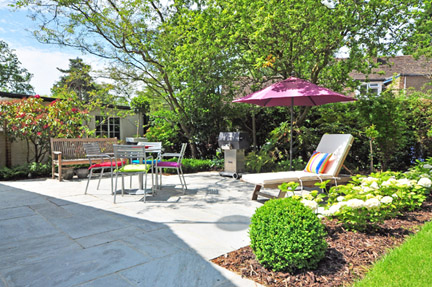
There are many ways to enhance the aesthetic of your outdoor living space. For instance, the addition of a simple but comfortable furniture and a cooling misting system can turn your regular patio into a cozy haven.
However, if you’re in need of other ideas on how to
enhance your outdoor space, here are a few ways:
Clean it up.
Before turning your outdoor living space into the
patio of your dreams, you must first clean it. Getting rid of unwanted debris
and raking the leaves can prevent unwanted growth like weed and molds.
A clean outdoor space will provide you with better
air quality as well as deter insects from swarming your place.
Decorate your porch.
The outside of your home should be just as inviting
as the inside.
Simple landscaping can do wonders to your home –
specifically to your porch. Adding a few plants and trees that complement each
other will not only make your house look more appealing; it can also protect
your home from bad weather conditions.
Moreover, adding vines and hedges will make you
feel more at ease, as plants can provide you additional privacy.
Add a shade.
One of the best ways to make your patio more
comfortable is by adding a shade that will help deflect the glare and protect
you from the sun’s harmful UV rays.
On the other hand, if you do prefer some sunshine
in your patio, then adding sky lighting or a pergola to your lanai roof can
give you just the right amount of light.
If you live in an area where there are a lot of
bugs and insects, consider adding drop shades or shutters to prevent them from
entering your place.
Cool down your patio.
While it’s always nice to lounge in an outdoor
space on the weekend, some days are just more discouraging than others. The sunlight
can sometimes be too scorching for you to want to hang out in your patio.
Investing in a good quality fan or misting system
for your outdoor living space is a great way to cool you down; it can also
provide additional humidity to your patio.
Additionally, a misting system is great for the
plants in your greenhouse.
Invest in good furniture.
If your porch or patio is big enough, consider
adding comfortable yet functional furniture. There are countless designs to
choose from that will fit your style and space.
Smaller spaces, on the other hand, can still be
enhanced by adding a simple set of chairs and an umbrella.
Install an outdoor fireplace.
Colder temperatures shouldn’t dissuade you from
relaxing in your outdoor living space. An outdoor fireplace will make an
excellent addition and may also serve as the focal point of your patio.
However, if a fireplace doesn’t seem feasible, a
traditional fire pit should be a good alternative.
A seating area around the fireplace or fire pit is
a great place to relax with your friends and family.
Your outdoor living space is an ideal place to bond
with your family and friends. It is also a versatile area that can cater to
events like simple gatherings and barbecue parties.
Turning your outdoor space into a place for fun and
relaxation shouldn’t be laborious or costly. With a little investment, plenty
of effort, and lots of creativity, you can transform your porch or patio into
the perfect hangout and leisure spot.
This is the official blog of Outdoor Design Group, Colorado Landscape Architects. For more information about our business and our services, click here.